Theoretical & Computational Chemistry
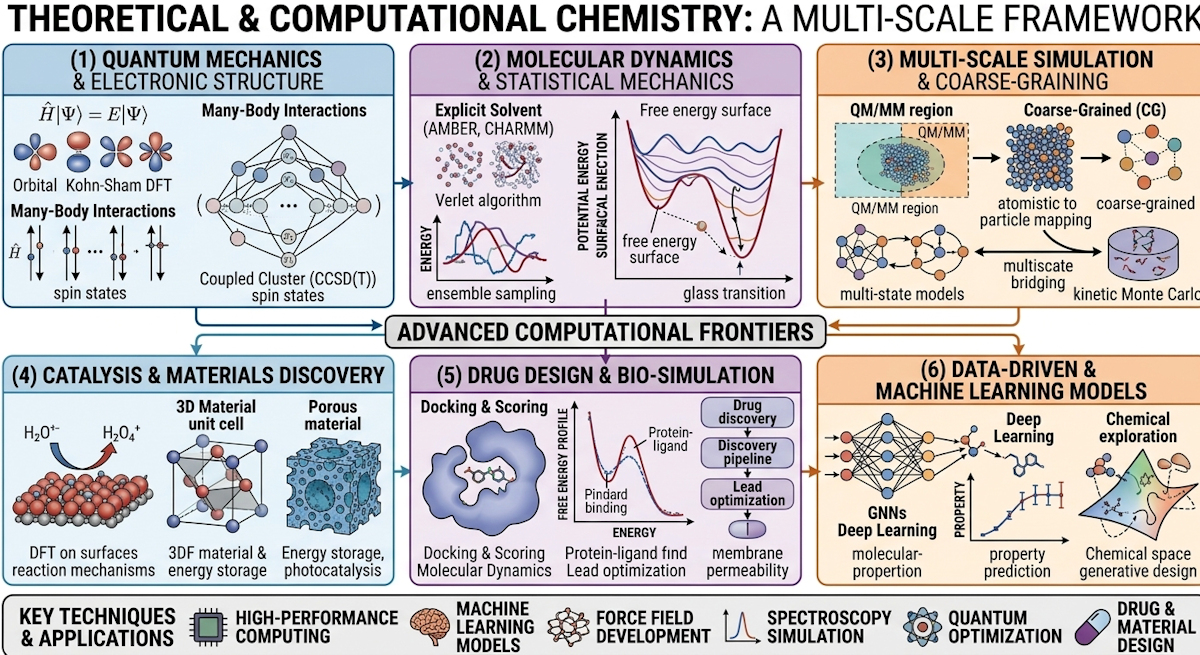
Innovation in theoretical chemistry leverages physics, high-performance computing, and AI to model molecular behavior digitally. Forecasting chemical interactions without physical lab work dramatically accelerates discoveries in medicine, sustainable energy, and custom materials.
The Linus Pauling Computational Chemistry Center
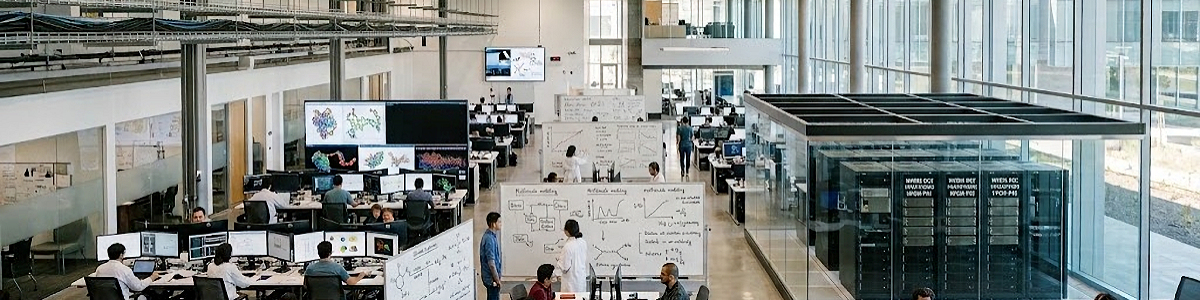
 Named in honor of Linus Pauling — the visionary physical chemist and crystallographer whose pioneering application of quantum mechanics to the chemical bond revolutionized our understanding of molecular structure and chemical valence — serves as the high-performance central hub for theoretical and computational modeling at Analex Laboratories. The laboratory blends quantum chemical calculations with advanced molecular dynamics simulations, specialized in predicting chemical reactivity, molecular properties, and complex reaction pathways from small molecules up through sprawling biological macromolecules.
Core Capabilities & Equipment
- Ab Initio Quantum Mechanics Suite: High-accuracy electronic structure calculation software solves the Schrödinger equation using advanced density functional theory (DFT) and coupled-cluster methods to predict molecular energetics, transition states, and spectroscopic properties with chemical accuracy.
- Massively Parallel Molecular Dynamics Clusters: High-performance computing nodes running specialized GPU-accelerated architectures simulate the physical movements and conformational changes of proteins, polymers, and complex fluids over microsecond timescales.
- Multiscale Simulation & Coarse-Graining Station: Advanced modeling environments bridge quantum mechanical precision with macroscopic thermodynamic behaviors, allowing researchers to simulate large-scale phenomena such as self-assembly and phase transitions in composite materials.
- Computer-Aided Drug Design & Binding Energetics Suite: Automated docking, free-energy perturbation (FEP) pipelines, and machine learning QSAR models screen vast virtual chemical libraries to evaluate binding affinities and optimize therapeutic candidate molecules.
Analex Laboratories stands at the forefront of theoretical and computational chemistry, bridging quantum mechanics, statistical mechanics, and advanced computing to unravel the fundamental mechanisms governing matter. By developing state-of-the-art mathematical models and electronic structure algorithms, the consortium decodes complex atomic interactions that remain invisible to conventional laboratory instrumentation. This foundational research transforms chemical theory into precise predictive power, enabling researchers to map potential energy surfaces, characterize short-lived transition states, and predict thermodynamic properties directly from first principles.
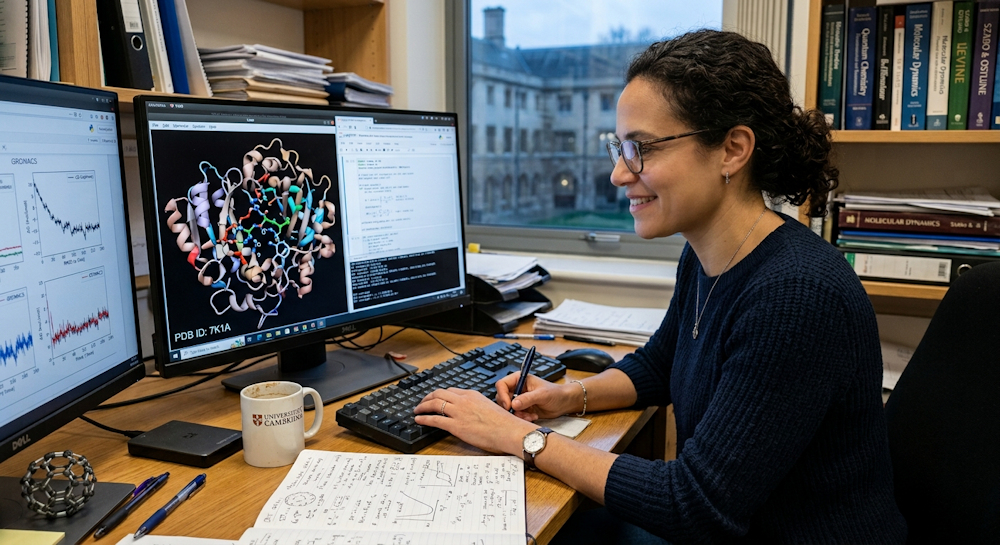
Central to the work at Analex is the continuous refinement of computational methodology. Researchers actively push the boundaries of density functional theory, multi-reference quantum chemical methods, and ab initio molecular dynamics to dramatically lower the computational cost of high-level simulations. Integrating these rigorous physics-based approaches with custom machine learning architectures allows Analex to screen vast chemical spaces at unprecedented speeds. These hybrid modeling pipelines generate highly accurate surrogate models, making it possible to simulate multimillion-atom systems over extended timescales without sacrificing quantum-level precision.
The practical impact of this methodology is felt across a broad spectrum of discovery, particularly in molecular design and sustainable technology. Analex Laboratories leverages its computational infrastructure to accelerate the development of next-generation pharmaceuticals, pinpointing binding affinities and metabolic pathways long before synthesis begins. Simultaneously, the consortium models novel catalytic frameworks to drive green chemistry initiatives, designing efficient catalysts for carbon capture, nitrogen fixation, and hydrogen production by calculating reaction barriers and optimizing active site geometries entirely in silico.
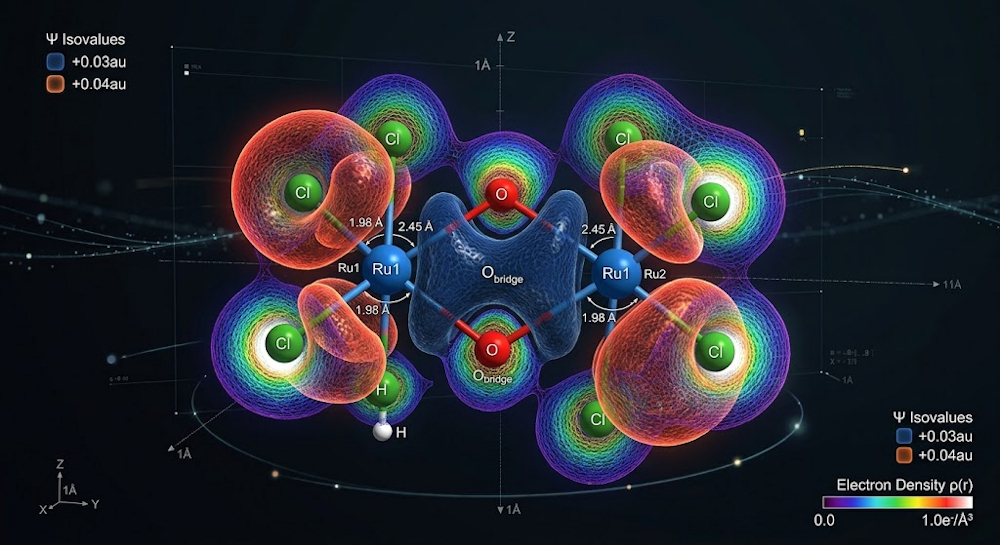
Looking toward the future, Analex Laboratories is pioneering the integration of emerging paradigm shifts like quantum computing and autonomous discovery loops into chemical research. By tailoring quantum algorithms specifically for hardware implementation, the consortium aims to overcome the exponential scaling limits of classical computers when simulating strongly correlated electronic systems. Through this multi-tiered approach—combining foundational theory, high-performance computing, and forward-looking technologies—Analex continues to shape the trajectory of modern chemistry, establishing predictive modeling as the primary engine for molecular discovery.