Biochemistry & Structural Biology
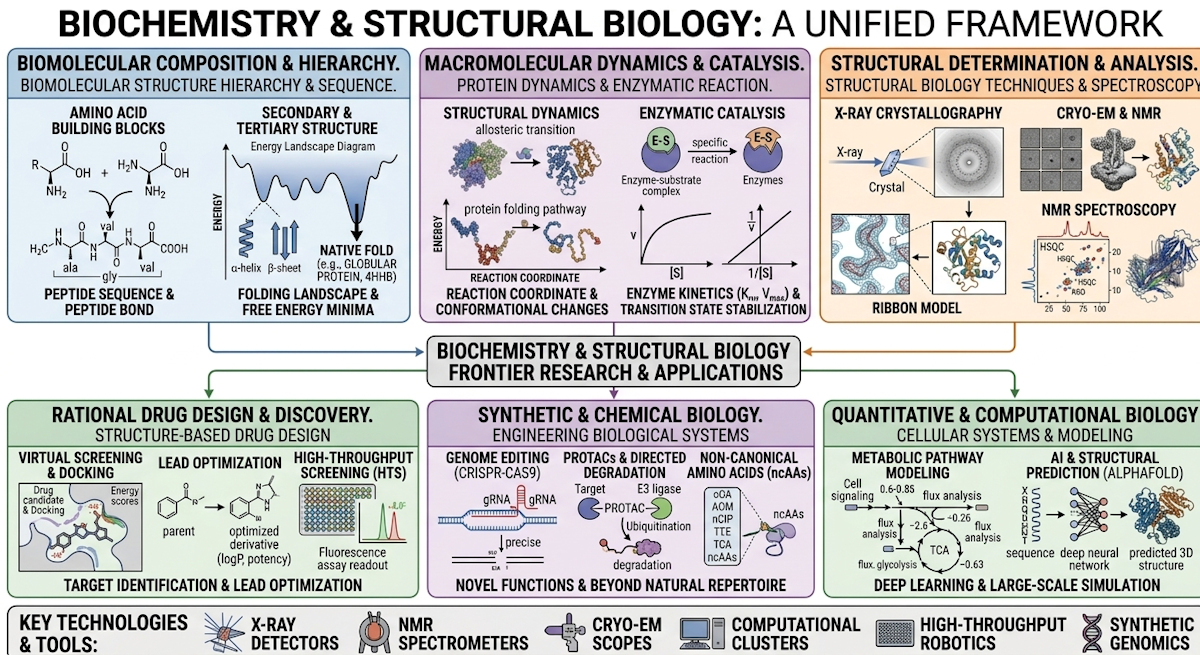
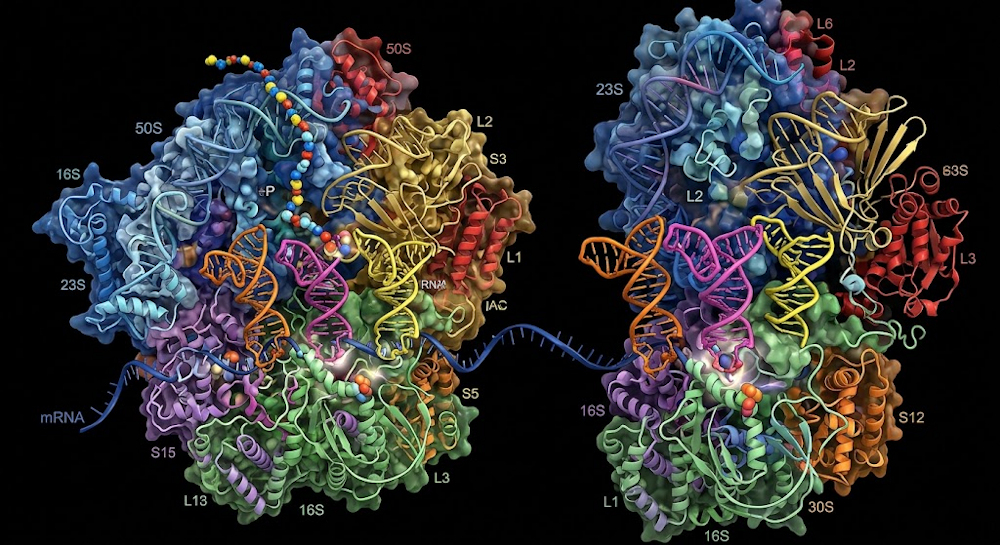
Biochemistry and structural biology decode the atomic architectures and chemical processes that govern living systems. Integrating advanced imaging techniques with predictive AI models allows scientists to model cellular machinery with precision. These molecular insights accelerate applied innovation, driving structure-guided drug discovery, targeted therapies, and synthetic biomaterials.
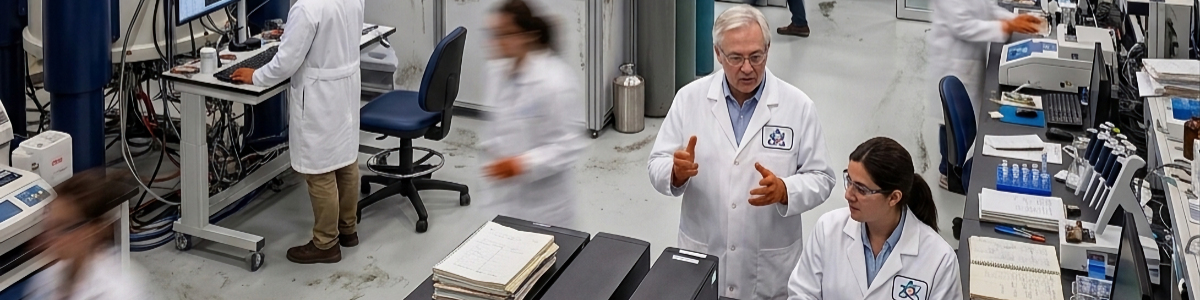
The Hodgkin Macromolecular Structure & Biophysics Center
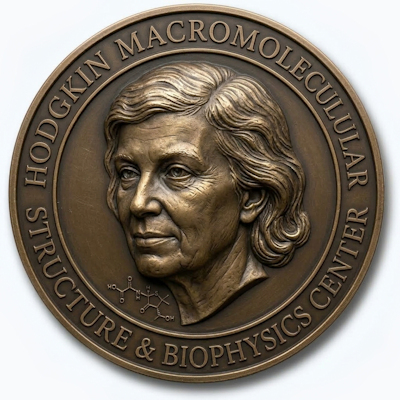 Serves as the atomic-scale structural determination and biophysical profiling engine at Analex Laboratories. Named in honor of Dorothy Hodgkin—the trailblazer who harnessed X-ray diffraction to unveil the molecular architectures of penicillin, vitamin B12, and insulin—the lab merges high-resolution structural mapping with molecular interaction assays to decode enzyme catalysis, protein folding, and complex cellular machinery.
Core Capabilities & Equipment
- Cryo-Electron Microscopy (Cryo-EM) & Tomography Suite: Advanced transmission electron microscopes generate sub-nanometer 3D maps of membrane receptors, macromolecular machines, and viral capsids preserved in vitrified states.
- X-Ray Crystallography & Synchrotron Beamline Station: Automated crystal-dispensing robotics and precision diffractometers resolve atomic positions, chemical coordination spheres, and active-site geometries within micro-crystals.
- High-Field Nuclear Magnetic Resonance (NMR) Spectrometry Array: High-frequency magnetic resonance instruments trace flexible protein domains, structural transitions, and metabolite interactions directly in liquid media.
- Surface Plasmon Resonance (SPR) & Isothermal Titration Calorimetry (ITC) Workstation: Label-free biophysical sensors measure association rates, affinity constants, and heat capacity changes during biomolecular binding events.
At Analex Laboratories, our research consortium is advancing the frontiers of biochemistry and structural biology by illuminating the molecular mechanisms that sustain life. By integrating spatial biology with fundamental biochemistry, our teams investigate the complex interactions within cellular environments. We map dynamic metabolic networks, resolve signal transduction pathways, and decipher the epigenetic modifications that regulate gene expression. This foundational research establishes the blueprint required to comprehend both normal physiological function and the biomolecular breakdowns that manifest as complex human diseases.
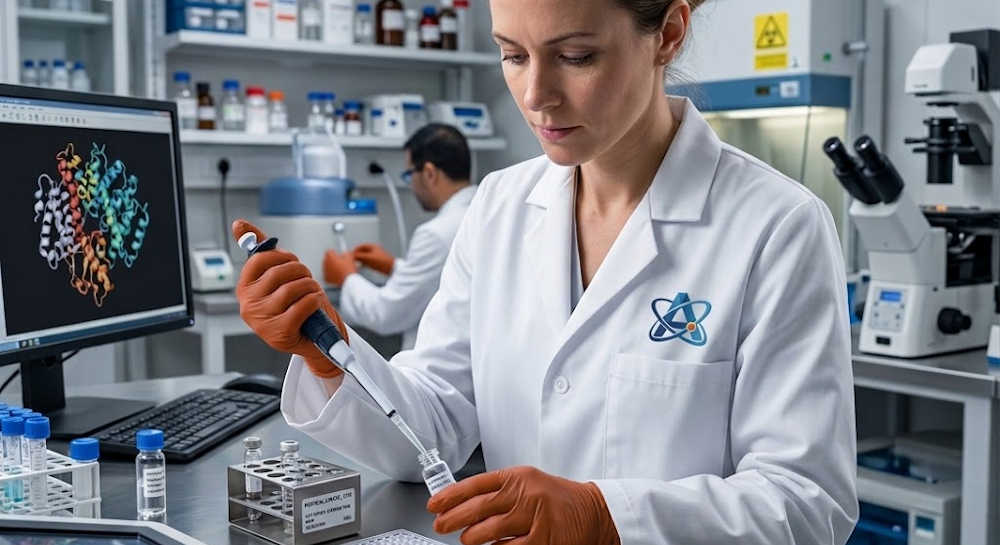
Central to our discovery engine is a technological infrastructure that bridges computational prediction and high-resolution experimental validation. Analex researchers utilize state-of-the-art cryo-electron microscopy (cryo-EM) alongside serial femtosecond crystallography to capture macromolecular assemblies in motion. By combining these structural approaches with artificial intelligence and deep-learning molecular dynamics simulations, we predict protein folding patterns and transient conformational states with sub-angstrom precision. This dual approach allows us to visualize short-lived enzymatic intermediates and flexible protein complexes that were previously inaccessible to structural determination.
This high-resolution structural insight directly fuels our translational and applied research pipelines. By identifying novel, cryptic binding pockets on traditionally "undruggable" protein targets, Analex scientists are pioneering structure-guided drug design strategies. Our bio-innovations include small-molecule inhibitors that selectively target mutated signaling nodes in cancer, proximity-inducing chimeras that direct targeted protein degradation, and engineered immunotherapies designed to bypass tumor resistance mechanisms. Each structural discovery serves as a framework for therapeutics tailored to interfere precisely with disease-causing biomolecules.
Beyond clinical applications, Analex Laboratories leverages biomolecular discovery to address global environmental and industrial challenges. Our synthetic biology initiatives utilize enzyme engineering to optimize biocatalysts capable of operating under extreme conditions. By deciphering the structural biology of microbial enzymes, our teams design pathways for plastic biodegradation, atmospheric carbon capture, and high-efficiency biofuel production. This convergence of structural determination, biochemical modeling, and rational design allows us to turn fundamental molecular discoveries into scalable biotechnology solutions.