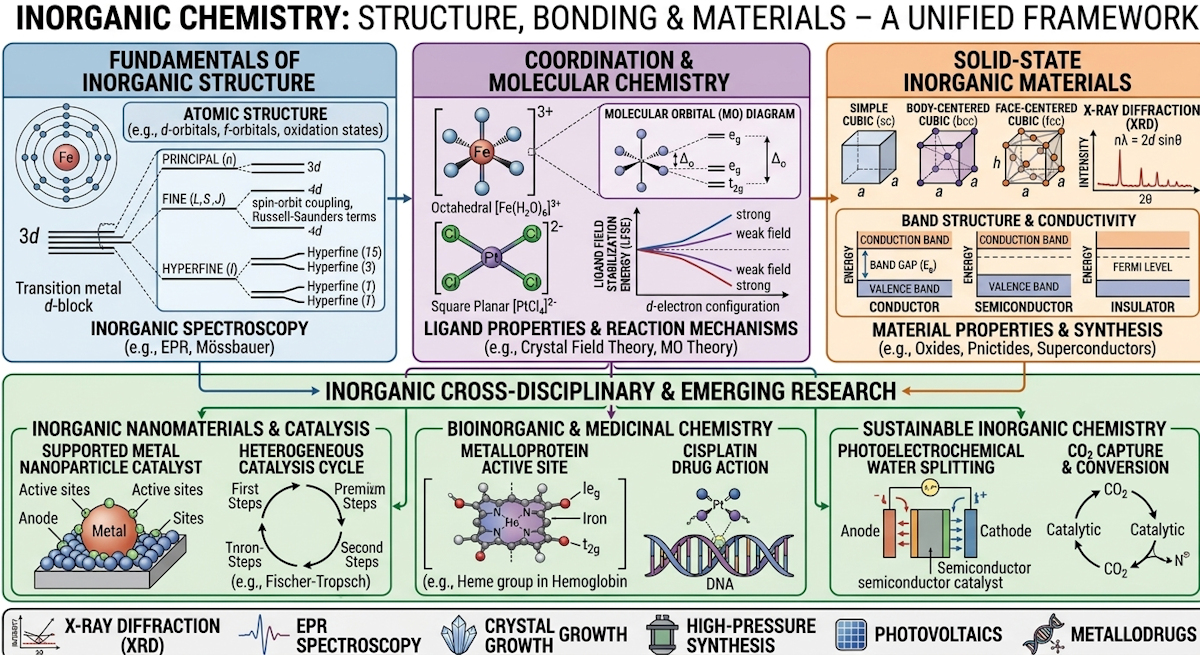
Inorganic Chemistry
Inorganic chemistry research and development centers on creating and analyzing non-carbon compounds, particularly transition metals, minerals, and solid-state structures. These chemical advances power core modern innovations, yielding high-performance catalysts, novel solar cells, and energy-dense battery architectures. Furthermore, cutting-edge metal-organic frameworks and nanoscale materials continue to revolutionize field applications ranging from biomedical treatments to electronic systems.
The Werner Coordination Chemistry & Organometallic Center
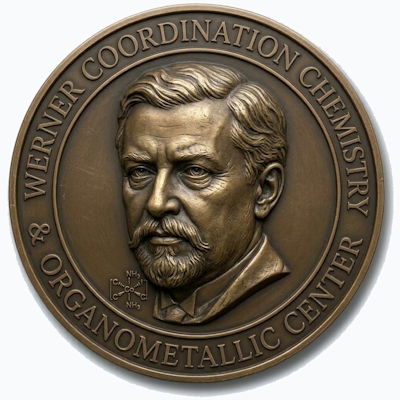 Serves as the advanced metal-complex synthesis and catalytic design hub at Analex Laboratories. Named in honor of Alfred Werner—the pioneer of coordination chemistry who revolutionized our understanding of transition metal complexes and spatial isomerism—the facility integrates air-free synthesis platforms with advanced spectroscopic instrumentation to engineer novel metal-organic frameworks, homogeneous catalysts, and coordination polymers.
Core Capabilities & Equipment
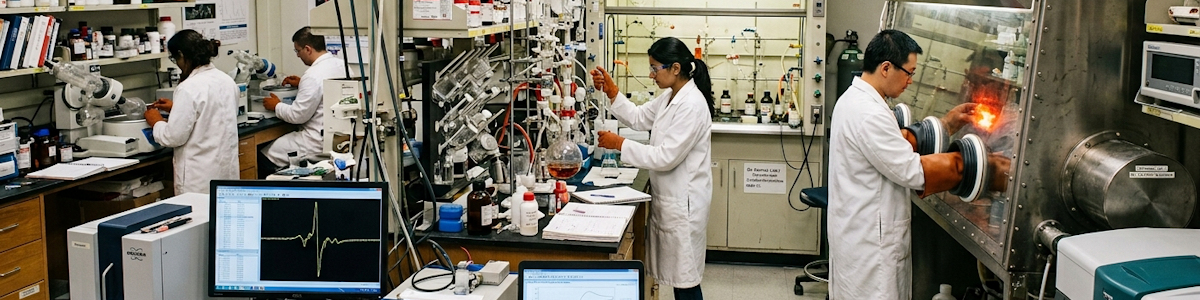
- Schlenk Line & Inert-Atmosphere Glovebox Suite: High-purity nitrogen and argon glovebox systems enable the synthesis and manipulation of highly air- and moisture-sensitive organometallic compounds and reactive metal precursors.
- Electron Paramagnetic Resonance (EPR) Spectrometer: Advanced microwave-frequency spectrometers analyze unpaired electrons in transition metal complexes and radical intermediates, characterizing oxidation states and metal-ligand covalent bonding.
- Automated Electrochemical Workstation: Potentiostats and cyclic voltammetry cells evaluate redox potentials, electron transfer kinetics, and electrochemical stability windows for novel inorganic catalysts and redox-active materials.
- Variable-Temperature UV-Vis-NIR Spectroscopy Suite: High-resolution optical spectrophotometers track d-d electronic transitions, ligand-to-metal charge transfers, and colorimetric changes across broad temperature ranges to probe coordination geometries.
Research and discovery in modern inorganic chemistry have evolved far beyond traditional compound synthesis, expanding into the precise molecular engineering of advanced functional materials, artificial photosynthetic systems, and tailored coordination complexes. At Analex Laboratories, investigations focus heavily on unlocking new paradigms in catalysis, energy conversion, and multi-dimensional solid-state architectures. By synthesizing novel metal-organic frameworks (MOFs) and transition-metal clusters with unprecedented topological features, researchers can address critical global challenges—ranging from carbon dioxide capture and selective hydrogenation to next-generation hydrogen generation and storage.
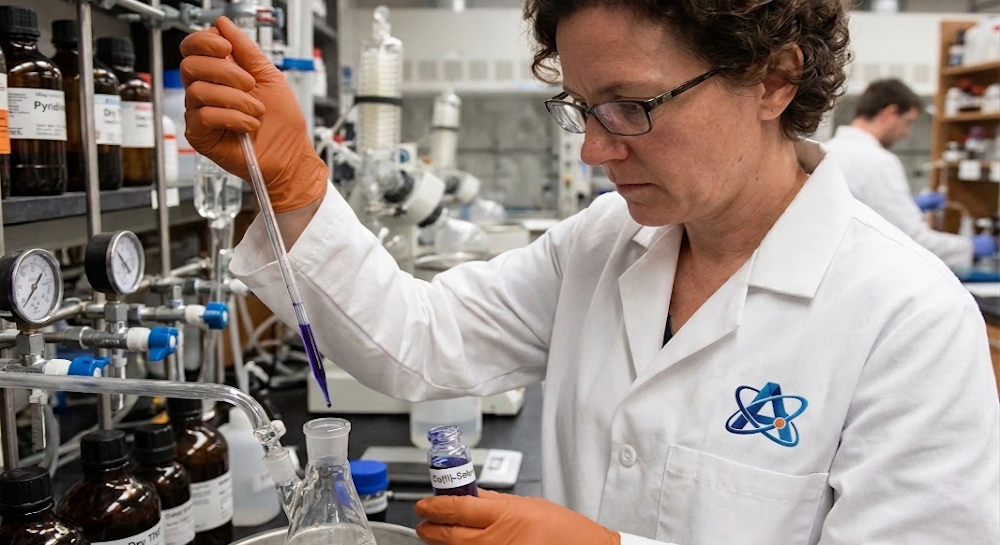
A major frontier within the consortium involves harnessing defect engineering and interface-assisted assembly to optimize electrocatalytic and photocatalytic reactions. Investigators utilize ultra-pure inert environments and high-resolution spectroscopic probes to monitor transient radical intermediates and electron-transfer dynamics in real time. This level of atomic-scale control allows the team to fine-tune band gaps, maximize active-site exposure, and build robust, durable materials capable of withstanding aggressive industrial and electrochemical environments without degradation.
Beyond energy applications, the field is experiencing a renaissance in bioinorganic chemistry and targeted molecular therapeutics. Analex Laboratories pioneers the design of customized metal-binding complexes that interact selectively with biological targets, opening new pathways for antimicrobial agents and diagnostic probes. By mapping coordination geometries and thermodynamic stabilities with extreme precision, scientists can predictably alter how metal ions behave inside biological systems, tailoring drugs with minimized toxicity and heightened efficacy.
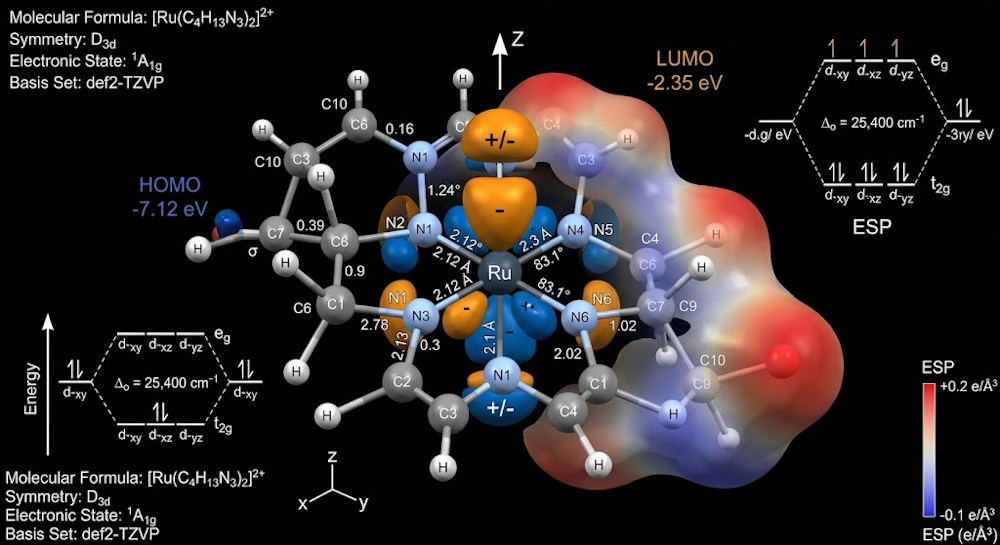
Ultimately, the synergy of automated high-throughput synthesis, advanced crystallography, and predictive quantum-chemical modeling continues to accelerate the pace of discovery across the inorganic landscape. As Analex Laboratories pushes these boundaries, the insights gained are transforming fundamental chemical theory into tangible, scalable technologies. This comprehensive approach ensures that new inorganic materials will play a pivotal role in shaping sustainable energy grids, green manufacturing processes, and advanced electronics for decades to come.