Bioarchaeology
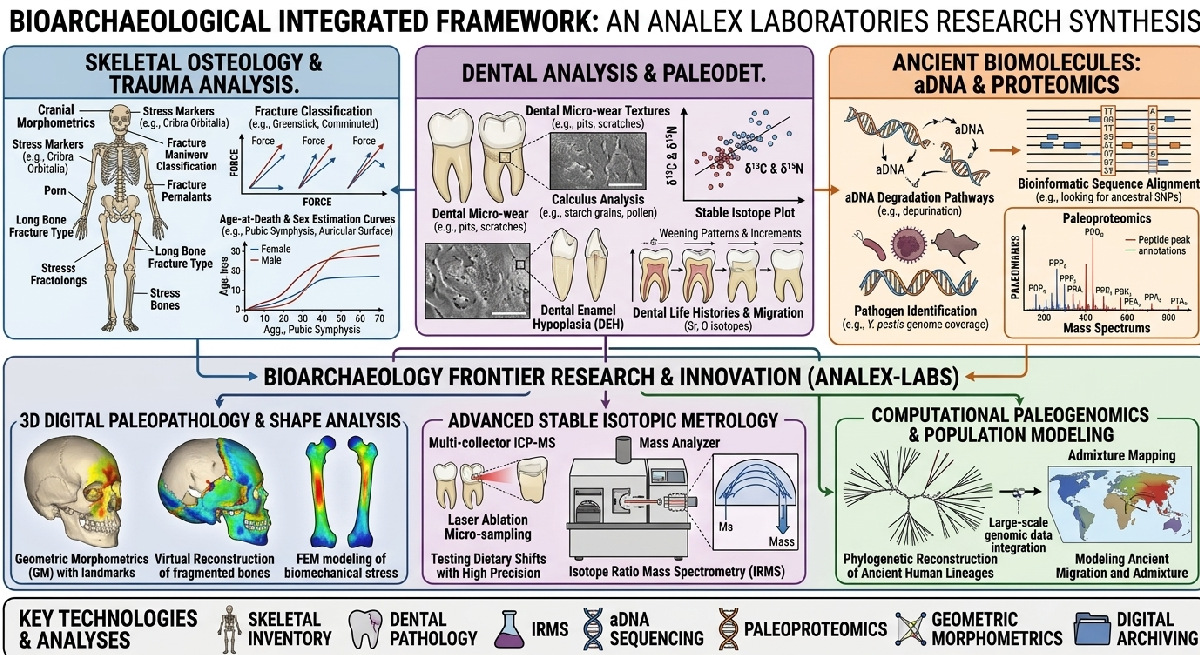
Bioarchaeology analyzes biological remains like human skeletons to reconstruct the health, diets, and environments of past populations. Innovations in ancient DNA sequencing, stable isotope analysis, and digital imaging now allow researchers to track human migration, disease, and social structures over millennia. Combining these scientific tools with traditional archaeological data continuously redefines our understanding of human adaptation and cultural evolution.
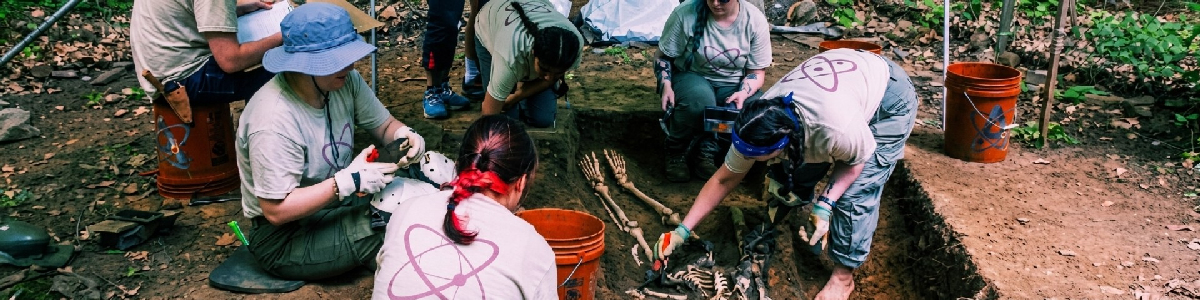
The Jane Buikstra Bioarchaeology & Skeletal Analysis Center
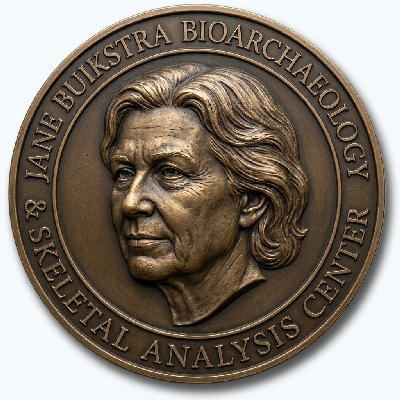 Named in honor of Jane Buikstra, the pioneering researcher who defined the field of modern bioarchaeology and standardized the study of human skeletal remains — serves as the primary osteological and paleopathological hub at Analex Laboratories. The facility integrates high-throughput molecular diagnostics with advanced skeletal imaging, specializing in reconstructing ancient health, dietary transitions, disease evolution, and population dynamics across deep time.
Core Capabilities & Equipment
- Stable Isotope Ratio Mass Spectrometry (IRMS): High-precision mass spectrometers analyze carbon, nitrogen, oxygen, and strontium ratios in bone collagen and tooth enamel to track lifelong migration patterns, weaning ages, and trophic shifts in ancient diets.
- Cleanroom Paleogenomics Suite: Ultra-clean containment laboratories equipped with UV sterilization and positive pressure air systems isolate ancient DNA (aDNA) from petrous bones and teeth, mapping genetic lineages, kinship networks, and pathogen evolution.
- High-Resolution Micro-CT Osteology Scanner: Non-destructive X-ray micro-tomography captures sub-micron internal bone architecture, allowing the team to measure trabecular density, diagnose age-related bone loss, and map subtle stress fractures without physical sectioning.
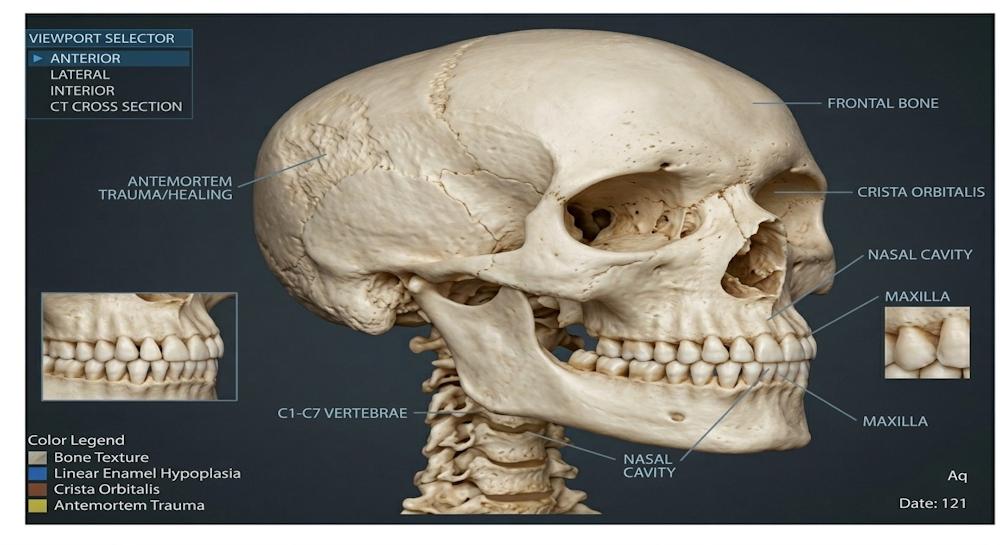
- Skeletal Paleopathology & Histomorphometry Station: Specialized diamond saws and polarizing light microscopes create thin sections of cortical bone to analyze cellular remodeling rates, chronic metabolic deficiencies, and childhood stress events (linear enamel hypoplasia).
At Analex Laboratories, our bioarchaeological research consortium is redefining how science reconstructs the human story. By analyzing physical remains—from skeletal structures and dental enamel to preserved ancient biomolecules—our interdisciplinary teams bridge the gap between biological data and historic human experience. We investigate how past populations adapted to environmental shifts, navigated emerging social structures, and responded to early public health crises, establishing a comprehensive biocultural framework for understanding human resilience across millennia.
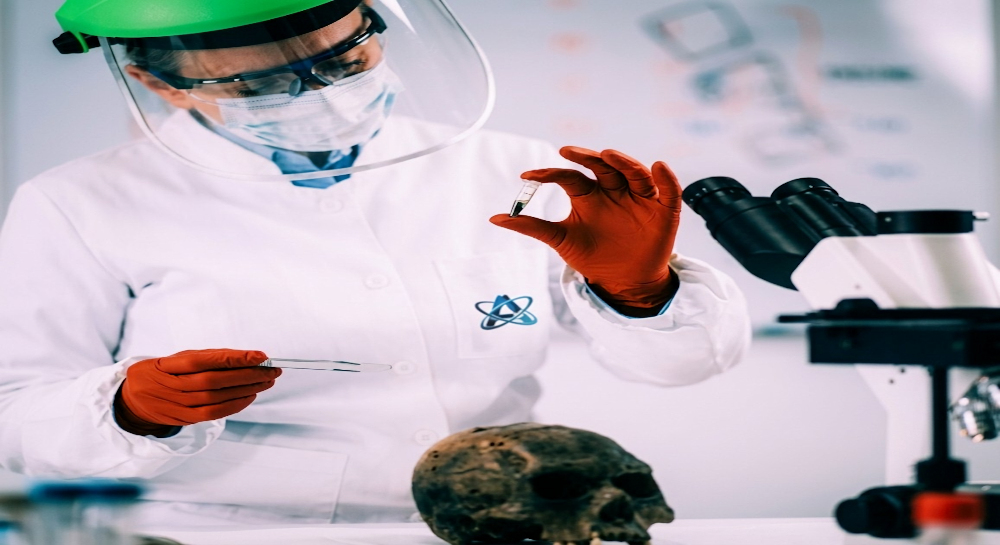
At the core of Analex's technical discovery is our proprietary biomolecular pipeline, which integrates high-throughput paleogenomics with high-resolution stable isotope analysis. Through micro-sampling of human teeth and cortical bone, our researchers map fine-grained isotopic life histories, uncovering individual migration routes, dietary transitions, and weaning patterns with seasonal accuracy. Simultaneously, our computational ancient DNA (aDNA) sequencing allows us to trace deep evolutionary lineages, population movements, and the ancient pathogens that co-evolved alongside early societies.
In tandem with chemical profiling, Analex Laboratories is pioneering non-destructive micro-imaging and digital paleopathology. Utilizing advanced 3D surface morphometrics, synchrotron micro-CT scanning, and confocal microscopy, our teams capture cellular-level skeletal trauma, micro-wear patterns, and metabolic stress markers without compromising the integrity of rare artifacts or ancestral remains. These ultra-high-definition digital models enable collaborative cross-border research, granting global scholars real-time access to analyze virtual osteological collections.
By marrying these advanced biological diagnostics with traditional contextual archaeology, Analex Laboratories turns isolated physical artifacts into vivid, multi-dimensional narratives of human history. Our discoveries clarify the evolutionary origins of modern diseases, shed light on historical resource management, and illuminate the lived experiences of marginalized populations often overlooked in written records. Through this integrated research ecosystem, we continue to set the benchmark for ethical, technology-driven bioarchaeology, ensuring that the legacy of past populations informs the biomedical and social challenges of tomorrow.