Powertrain & Drivetrain Technology
Modern research, development, and engineering in Automotive Powertrain and Drivetrain Technology focuses on creating efficient, electrified, and intelligently controlled propulsion systems capable of meeting stringent emissions regulations while delivering enhanced performance and driving dynamics. At the foundational layer, advanced combustion strategies, electrified architectures, and integrated thermal management systems decouple traditional powertrain limitations from vehicle design constraints, enabling the development of hybrid, battery-electric, and fuel cell propulsion systems alongside highly optimized internal combustion engines. These advanced powertrain systems integrate sophisticated electronic controls, lightweight materials, and modular manufacturing approaches to deliver propulsion solutions with reduced environmental impact, lower total cost of ownership, and adaptable performance characteristics across passenger vehicles, commercial fleets, and off-highway applications.
Advanced Internal Combustion Engine Architectures
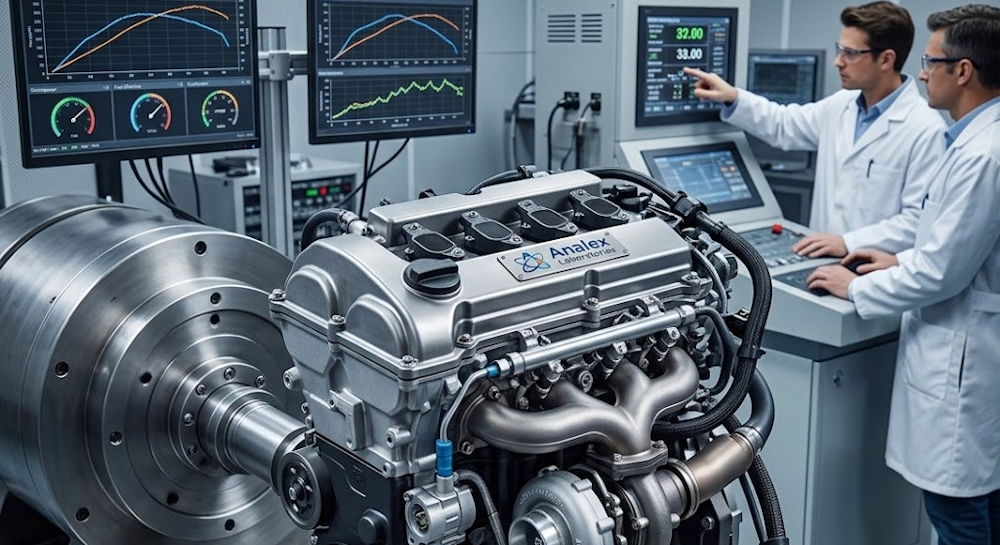
Modern internal combustion engines continue to evolve through advanced combustion strategies, friction reduction technologies, and thermal efficiency optimizations that maximize energy extraction from hydrocarbon fuels. Downsized, turbocharged engines with direct fuel injection and variable valvetrain systems deliver power outputs previously requiring significantly larger displacements while maintaining efficiency during light-load operation. At the core of these capabilities are sophisticated engine management systems, advanced materials capable of withstanding higher combustion pressures, and precision manufacturing techniques that enable tighter tolerances and reduced parasitic losses.
The evolution of Advanced Internal Combustion Engines represents a fundamental transition from naturally aspirated, port-injected architectures toward highly boosted, direct-injected systems with computer-optimized combustion events and minimized mechanical friction.
Key Technical Pillars
Downsizing and Turbocharging Strategies- Reduced displacement engines supplemented by single, twin, or variable-geometry turbochargers maintain power density while improving part-load efficiency
- Twin-scroll and divided turbine housing designs optimize pulse energy extraction and reduce turbo lag
- Electrically assisted turbochargers and superchargers eliminate lag while providing boost-on-demand without parasitic losses
- Homogeneous charge compression ignition and spark-assisted compression ignition achieve diesel-like efficiencies with gasoline fuel
- Lean-burn stratified charge operation extends dilution limits and reduces pumping losses
- Multi-pulse injection strategies optimize fuel-air mixing and control combustion phasing
- Mechanically variable compression ratios adapt to load conditions, enabling high compression for efficiency and low compression for knock-limited high-boost operation
- Cylinder deactivation and variable displacement systems reduce pumping losses by operating on partial engine displacement during light loads
Recent Innovations
Advanced Ignition Systems- High-energy plasma ignition and multi-spark systems extend dilution limits and improve combustion stability
- Corona discharge and microwave-assisted ignition enable ultra-lean combustion regimes
- Diamond-like carbon coatings on piston rings and tappets reduce friction coefficients
- Variable displacement oil pumps and thermal management systems minimize parasitic losses
- Roller bearing camshaft supports and low-tension piston rings reduce mechanical friction
- Plasma-sprayed cylinder bore coatings and thermal barrier piston crown coatings reduce heat rejection
- Encapsulated exhaust manifolds and integrated exhaust headers accelerate catalyst light-off and improve turbocharger response
Strategic & Operational Advantages
- Regulatory Compliance: Advanced combustion strategies enable compliance with stringent particulate matter, nitrogen oxide, and carbon dioxide emissions standards
- Fuel Economy Improvement: Downsized, boosted engines achieve 15-30% fuel economy improvements over naturally aspirated predecessors
- Performance Maintenance: Turbocharging maintains power and torque outputs despite displacement reduction
- Transitional Technology: Optimized internal combustion engines serve as bridge technologies during electrification transitions
Electrified Propulsion Architectures
The electrification of automotive powertrains encompasses battery electric, plug-in hybrid, and full hybrid architectures that replace or supplement internal combustion engines with electric motors, batteries, and power electronics. These systems decouple vehicle propulsion from fossil fuel dependence while enabling regenerative braking, torque vectoring, and optimized energy management strategies. Advanced power electronics, high-energy-density batteries, and efficient electric motor designs enable driving ranges and performance characteristics competitive with conventional powertrains.
Electrified Propulsion represents the convergence of electrical engineering, electrochemistry, and thermal management to create propulsion systems with zero tailpipe emissions, instant torque delivery, and grid-connected energy storage capabilities.
Key Technical Pillars
Battery Electric Powertrains- High-voltage battery packs utilizing nickel-manganese-cobalt, lithium-iron-phosphate, or solid-state chemistries provide energy storage with specific energies exceeding 250 watt-hours per kilogram
- Integrated motor-inverter-transmission units mount directly to drive axles, reducing packaging complexity
- Regenerative braking systems recover kinetic energy during deceleration, extending effective range
- Series hybrid configurations utilize internal combustion engines exclusively as generators, decoupling engine speed from vehicle speed
- Parallel hybrid systems combine engine and electric motor torque through mechanical couplings
- Power-split hybrid architectures continuously vary power distribution between mechanical and electrical paths
- High-capacity battery packs enable 40-100 kilometer all-electric ranges for daily commuting
- Onboard chargers and bidirectional power electronics enable grid connectivity and vehicle-to-grid services
- Blended operation strategies optimize fuel and electricity usage based on route and driver behavior
Recent Innovations
Solid-State Battery Technology- Ceramic and polymer electrolytes replace liquid electrolytes, enabling higher voltage operation and improved safety
- Lithium-metal anodes provide increased energy density compared to traditional graphite anodes
- Simplified thermal management requirements reduce packaging complexity and cooling system mass
- Wide-bandgap semiconductor devices reduce switching losses and enable higher operating temperatures
- Reduced cooling requirements and increased power density improve inverter efficiency
- Inductive charging systems enable automated charging without cable connection
- 800-volt architectures and high-current charging reduce recharge times to 15-30 minutes for 80% capacity
Strategic & Operational Advantages
- Zero Emissions Operation: Battery electric vehicles eliminate tailpipe emissions during operation, improving urban air quality
- Energy Cost Reduction: Electricity costs per kilometer significantly undercut gasoline and diesel fuel costs
- Reduced Maintenance: Electric powertrains eliminate oil changes, spark plugs, and exhaust system maintenance
- Grid Integration: Vehicle batteries provide distributed energy storage for grid stabilization and renewable energy integration
Advanced Transmission and Driveline Systems

Modern automotive transmissions optimize power delivery through multi-ratio gear systems, continuously variable transmissions, and electrified torque converters that match engine operating characteristics to vehicle speed and load requirements. Dual-clutch transmissions, automated manual gearboxes, and multi-speed automatic transmissions provide rapid shift speeds and optimized efficiency across driving conditions. Electrified axles and torque-vectoring differentials enhance traction, stability, and handling characteristics through intelligent torque distribution.
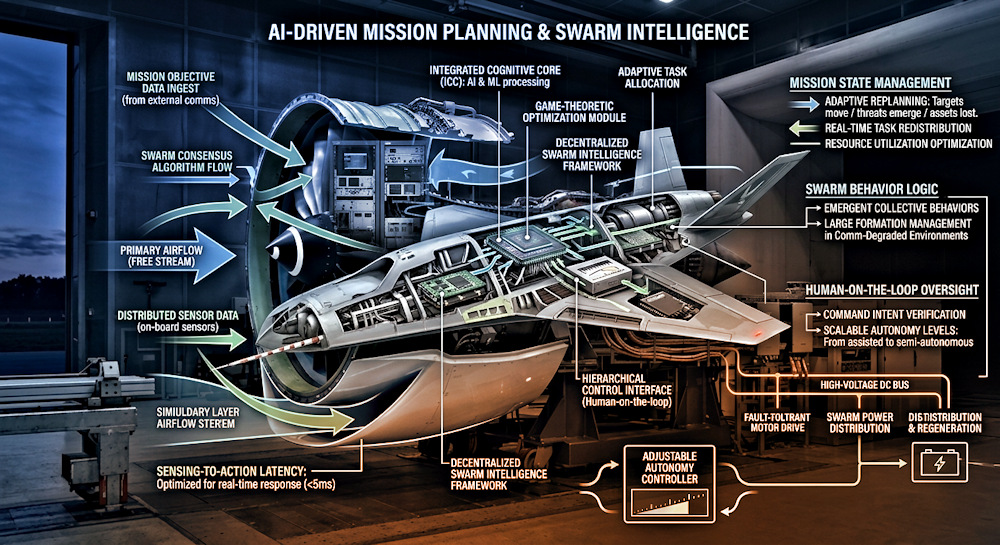
Advanced Transmission Systems represent the mechanical and control system integration that enables engines and motors to operate at peak efficiency while delivering seamless power delivery and optimized driving dynamics.
Key Technical Pillars
Multi-Speed Automatic Transmissions- Eight, nine, and ten-speed planetary automatic transmissions provide narrow ratio steps for optimized engine operation
- Torque converter lockup clutches and damper systems improve efficiency while maintaining launch smoothness
- Adaptive shift strategies learn driver behavior and route characteristics to anticipate gear selections
- Separate clutches for odd and even gears enable pre-selection and instantaneous shifts
- Wet and dry clutch variants optimize for torque capacity, efficiency, and packaging constraints
- Launch control and creep functions emulate torque converter behavior
- Belt-and-pulley or roller-based systems provide infinite ratio variability for optimal engine speed maintenance
- Step-less ratio changes eliminate shift shock and maintain constant power delivery
- Ratio control strategies simulate conventional transmission feel while maximizing efficiency
Recent Innovations
Electrified Transmission Components- Integrated starter-generators and mild-hybrid motor-generators mount within transmission bell housings
- Electrically actuated shift mechanisms and clutch controls eliminate hydraulic systems
- Transmission-mounted electric motors provide torque fill during shifts and launch assist
- Multi-plate clutch differentials apportion torque between left and right wheels for enhanced cornering performance
- Rear-axle steering and torque vectoring improve agility and stability
- Brake-based torque vectoring provides cost-effective traction enhancement
- Automatically disconnecting front or rear axles reduce parasitic losses in all-wheel-drive vehicles
- Modular axle architectures enable common platforms across front-wheel, rear-wheel, and all-wheel-drive variants
Strategic & Operational Advantages
- Efficiency Optimization: Multi-speed transmissions maintain engine operation in optimal efficiency islands
- Performance Enhancement: Rapid shift speeds and torque vectoring improve acceleration and handling characteristics
- Packaging Flexibility: Compact transmission designs enable diverse vehicle architectures from front-engine to mid-engine layouts
- Driver Satisfaction: Seamless shift quality and intelligent ratio selection enhance perceived vehicle refinement
Electric Motor and Power Electronics Integration

Electric and hybrid vehicle powertrains rely on high-efficiency electric motors, inverters, and DC-DC converters to convert electrical energy to mechanical motion and manage power distribution. Permanent magnet synchronous motors, induction motors, and switched reluctance motors provide high power densities and efficiency across wide speed ranges. Advanced power electronics utilizing silicon carbide and gallium nitride semiconductors enable high-frequency operation with reduced losses and improved thermal characteristics.
Electric Motor and Power Electronics Integration represents the electromechanical and solid-state physics foundation of electrified propulsion, enabling efficient energy conversion with minimal losses and compact packaging.
Key Technical Pillars
Permanent Magnet Synchronous Motors- Interior permanent magnet and surface permanent magnet designs optimize for efficiency, power density, and field-weakening capability
- Rare-earth and rare-earth-reduced magnet formulations balance performance with material availability and cost
- Hairpin and continuous wave winding technologies improve slot fill factors and thermal performance
- Copper rotor induction motors eliminate permanent magnet requirements while maintaining competitive power densities
- Synchronous reluctance and assisted reluctance motors combine magnet-free operation with high-efficiency characteristics
- Advanced rotor designs minimize losses and maximize torque production
- Liquid cooling jackets and direct oil cooling manage winding and magnet temperatures
- Stator laminations with integrated cooling channels improve heat rejection
- Encapsulation and potting materials improve thermal conductivity and vibration resistance
Recent Innovations
Axial Flux and Transverse Flux Motors- Disc-shaped rotor configurations provide high torque densities and compact axial packaging
- Dual-rotor and multi-airgap designs maximize active material utilization
- Transverse flux machines achieve high force densities for direct-drive applications
- Power semiconductors, gate drivers, and DC-link capacitors integrated into compact modules
- Double-sided cooling and substrate-embedded cooling channels improve thermal performance
- Reduced interconnect inductance improves switching characteristics and electromagnetic compatibility
- Onboard bidirectional chargers enable AC charging and vehicle-to-home power export
- High-power DC fast charging interfaces support commercial charging infrastructure
- Grid services and demand response capabilities provide revenue opportunities
Strategic & Operational Advantages
- Instant Torque Delivery: Electric motors provide maximum torque from zero speed, eliminating launch lag and improving drivability
- High Efficiency: Motor and inverter efficiencies exceed 95% across broad operating ranges
- Regenerative Capability: Bidirectional power flow enables kinetic energy recovery and extended range
- Packaging Versatility: Compact motor dimensions enable flexible vehicle layout and crash space optimization
Thermal Management and Energy Optimization

Advanced automotive powertrains require sophisticated thermal management systems that maintain components within optimal temperature ranges while minimizing energy consumption. Integrated cooling circuits manage engine, transmission, battery, and power electronics temperatures through shared or independent coolant loops. Heat pumps, waste heat recovery, and predictive thermal management optimize energy usage for cabin comfort and powertrain operation across ambient conditions.
Thermal Management represents the systems engineering discipline that balances heating and cooling requirements against energy consumption, ensuring reliable operation while maximizing efficiency and passenger comfort.
Key Technical Pillars
Multi-Circuit Cooling Systems- Separate high-temperature circuits for internal combustion engines and low-temperature circuits for batteries and power electronics
- Valve-controlled coolant routing directs thermal energy where needed and bypasses inactive circuits
- Electric water pumps and variable-speed fans optimize coolant flow and airflow based on demand
- Heat pump systems extract thermal energy from ambient air for cabin heating, reducing battery drain compared to resistive heating
- Multi-mode systems switch between cooling, heating, and dehumidification based on cabin and ambient conditions
- Refrigerant cooling of batteries and power electronics provides enhanced heat rejection capability
- Exhaust gas heat exchangers and thermoelectric generators convert waste thermal energy to electricity
- Rankine cycle and thermoelectric systems improve overall powertrain efficiency
- Engine coolant heat recovery accelerates cabin heating during cold starts
Recent Innovations
Predictive Thermal Management- Navigation-based preconditioning optimizes battery and cabin temperatures before arrival at charging stations or destinations
- Machine learning algorithms predict thermal loads based on route, weather, and driver behavior
- Over-the-air updates refine thermal management strategies based on fleet data
- Direct liquid immersion of battery cells and power electronics provides superior heat transfer
- Dielectric fluids enable direct contact cooling without electrical isolation requirements
- Phase-change materials and thermal storage systems buffer transient thermal loads
- Coordinated control of cabin climate, battery thermal conditioning, and powertrain cooling optimizes total energy consumption
- Preconditioning during grid connection minimizes range impact of thermal management
Strategic & Operational Advantages
- Range Preservation: Efficient thermal management minimizes energy consumption for heating and cooling, preserving driving range
- Component Longevity: Maintaining optimal temperatures extends battery life and power electronics reliability
- Fast Charging Capability: Pre-conditioned batteries accept higher charge rates, reducing charging times
- Passenger Comfort: Rapid cabin heating and cooling improves user satisfaction and market acceptance
Alternative Fuels and Sustainable Propulsion
The diversification of automotive energy sources includes hydrogen fuel cells, synthetic fuels, biofuels, and compressed natural gas that reduce lifecycle carbon emissions and provide alternatives to petroleum-based fuels. Fuel cell electric vehicles generate electricity through electrochemical reaction of hydrogen and oxygen, emitting only water vapor. Synthetic and renewable fuels provide drop-in replacements for conventional gasoline and diesel, enabling carbon-neutral operation in existing internal combustion engines.
Alternative Fuels represent the pathway toward decarbonized transportation through renewable energy carriers and sustainable fuel production methods that minimize environmental impact across the full lifecycle.
Key Technical Pillars
Proton Exchange Membrane Fuel Cells- Membrane electrode assemblies with platinum catalysts facilitate electrochemical reaction of hydrogen and oxygen
- Balance-of-plant components manage air supply, humidification, and thermal management
- High-pressure hydrogen storage in composite tanks provides driving ranges comparable to gasoline
- Power-to-liquid processes convert renewable electricity and captured carbon dioxide to synthetic gasoline and diesel
- Biomass-derived fuels from agricultural waste and algae provide renewable hydrocarbons
- E-fuels enable carbon-neutral operation in existing vehicle fleets without infrastructure changes
- Modified spark-ignition engines operate on hydrogen fuel with zero carbon emissions
- Direct injection and port injection strategies manage combustion stability and nitrogen oxide formation
- Cryogenic hydrogen storage and delivery systems manage fuel density and boil-off
Recent Innovations
Solid Oxide Fuel Cells- High-temperature fuel cells operate on hydrogen, natural gas, or synthetic fuels with high efficiency
- Combined heat and power operation provides waste heat for cabin heating and battery conditioning
- Fuel flexibility enables transitional operation during hydrogen infrastructure development
- Metal hydride and complex hydride storage systems provide solid-state hydrogen storage at moderate pressures
- Liquid hydrogen tanks with vacuum insulation and cryogenic cooling enable high-density storage
- High-pressure composite tanks achieve 700-bar storage pressures for extended range
- Direct air capture systems extract carbon dioxide for synthetic fuel production
- Electrolysis and Fischer-Tropsch synthesis convert renewable electricity to liquid hydrocarbons
- Lifecycle carbon analysis ensures net carbon neutrality across fuel production and consumption
Strategic & Operational Advantages
- Carbon Neutrality: Renewable and synthetic fuels enable lifecycle carbon-neutral transportation
- Infrastructure Leverage: Drop-in fuels utilize existing distribution infrastructure and vehicle fleets
- Energy Security: Diversified fuel sources reduce dependence on petroleum imports and price volatility
- Scalability: Synthetic fuel production scales with renewable electricity capacity, enabling sector-wide decarbonization
Control Systems and Vehicle Integration
Modern automotive powertrains rely on sophisticated electronic control units, sensors, and software algorithms that optimize performance, efficiency, and emissions across operating conditions. Model-based control strategies, predictive algorithms, and machine learning enable real-time optimization of combustion, shifting, and torque distribution. Vehicle-level integration coordinates powertrain operation with chassis dynamics, driver assistance systems, and energy management for holistic vehicle optimization.
Control Systems and Vehicle Integration represent the software and electronics foundation that enables powertrain components to function as cohesive, optimized systems responsive to driver demands and environmental conditions.
Key Technical Pillars
Model-Based Engine Control- Physics-based models predict combustion behavior, emissions formation, and component temperatures
- Model predictive control optimizes fuel injection, ignition timing, and air charge across transient conditions
- Observer algorithms estimate unmeasured variables and detect sensor faults
- Rule-based and optimization-based strategies allocate power between engine, motor, and battery
- Dynamic programming and equivalent consumption minimization strategies optimize for fuel economy or performance
- Predictive energy management utilizes route preview and traffic data to optimize charge sustenance
- Integrated powertrain and chassis control manages traction, stability, and handling limits
- Anti-jerk and driveline damping algorithms improve drivability and component life
- Launch control and shift quality optimization enhance perceived performance
Recent Innovations
Over-the-Air Updates and Cloud Connectivity- Remote software updates enable continuous improvement of control strategies and calibration
- Fleet learning aggregates data across vehicle populations to identify optimization opportunities
- Cloud-based computation offloads complex optimization from onboard processors
- Simulation-based calibration reduces development time and physical testing requirements
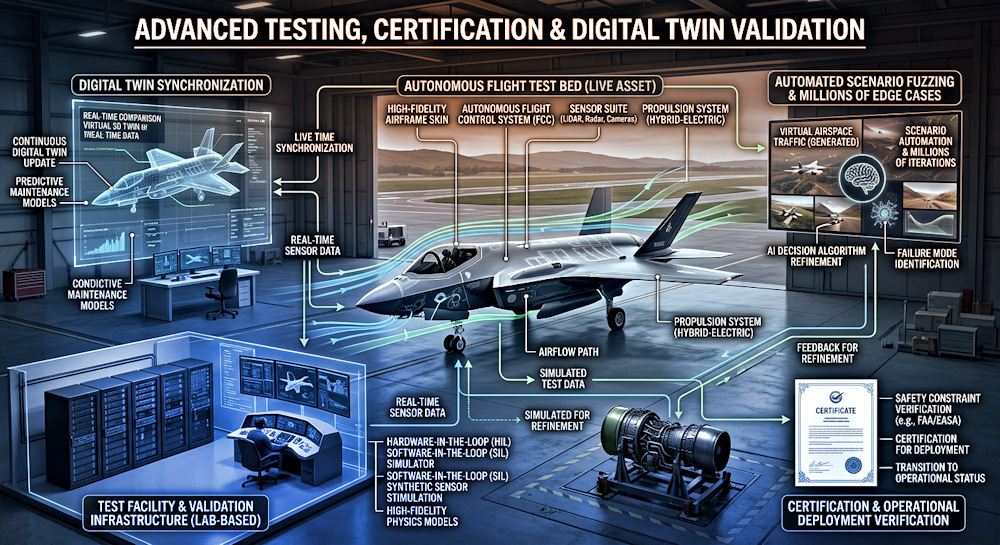
- Digital twins replicate individual vehicle behavior for predictive maintenance and personalization
- Hardware-in-the-loop testing validates control software before vehicle integration
- Neural network-based models capture complex nonlinear relationships in combustion and emissions
- Reinforcement learning optimizes energy management strategies for individual driving patterns
- Anomaly detection identifies incipient component failures before performance degradation
Strategic & Operational Advantages
- Continuous Improvement: Software updates enable performance and efficiency enhancements throughout vehicle life
- Personalization: Adaptive controls learn individual driver preferences and optimize accordingly
- Reduced Development Time: Virtual calibration and simulation accelerate powertrain development cycles
- Predictive Capability: Data-driven models anticipate component behavior and enable preventive maintenance